
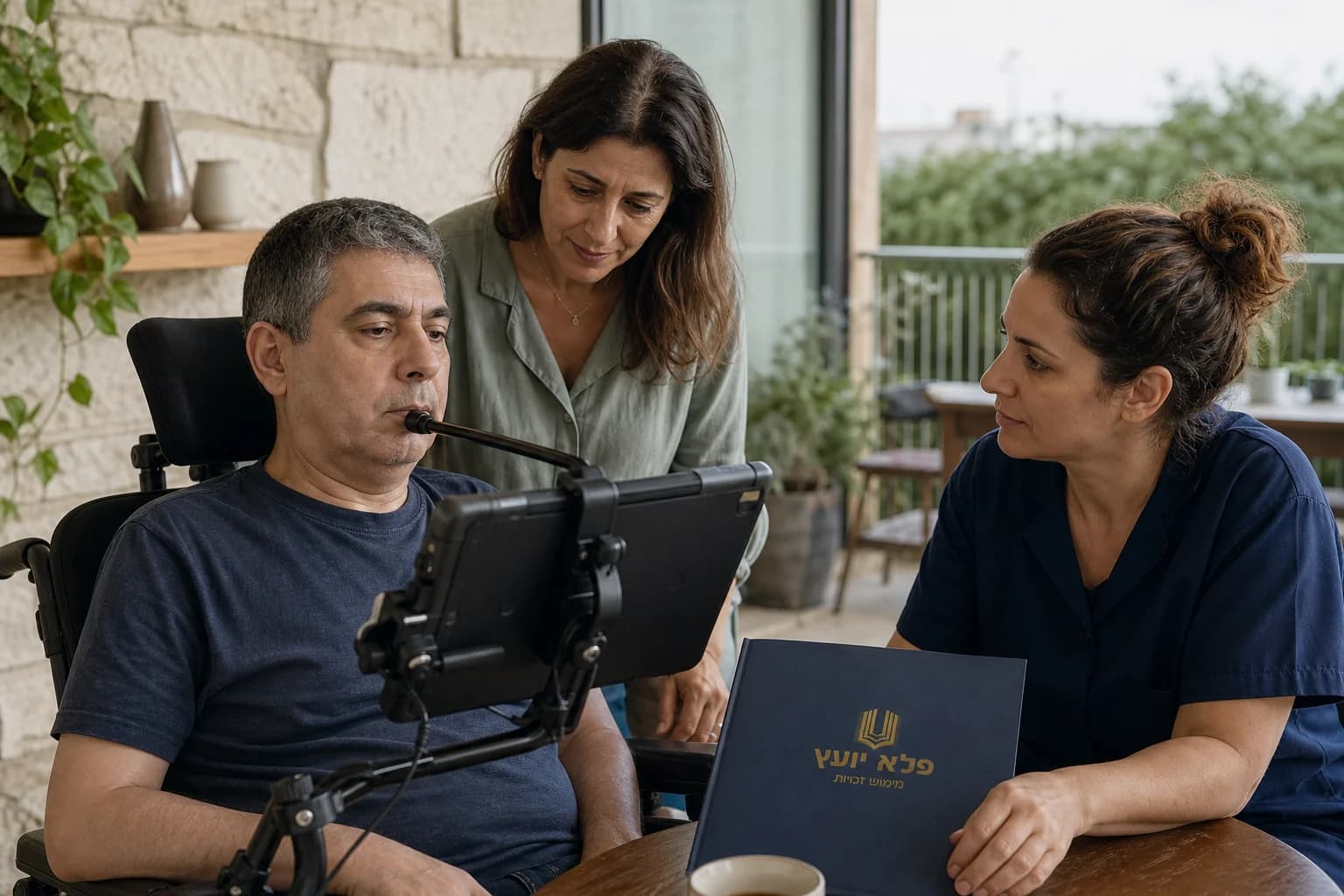
What is distinctive about a long-term care insurance claim in rapidly progressive conditions such as ALS: why you must not wait, how to document rapid deterioration, what to ask the treating clinic for, and how to handle the questions of supervision and breathing.
Here time is the critical factor
In most long-term care situations we recommend not rushing and waiting until the picture settles. In ALS and rapidly progressive wasting conditions the recommendation is the opposite: start at once.
The reason is simple. In these conditions deterioration can be very rapid, and a state in which the person can still communicate and is able to sign may change within months. Anything requiring a signature, consent or cooperation is worth arranging early.
In addition, many policies contain a waiting period. The earlier and more precisely the date the condition began is documented, the more favourable the period for which the benefit is assessed.
What to arrange at an early stage
This is a list worth dealing with in the first weeks after diagnosis, even if functioning is still reasonable. It is intended to prevent a situation in which complex legal action is needed at a stage when the family is already under an entirely different kind of strain.
- Locating all existing policies — private, group and through the workplace
- An enduring power of attorney while they can still sign, if one has not yet been made
- Establishing which authorising documents each insuring body requires
- Opening a functional diary from the first day
- Requesting detailed summaries from the treating clinic or centre
- Checking the long-term care benefit and other entitlement routes in parallel
Document deterioration, not just a condition
In progressive conditions, the strongest documentation is that which shows change over time. Three documents two months apart, each describing a slightly worse condition, tell a story that is hard to argue with.
So it is worth asking the treating team for periodic documentation rather than a single summary. Specialist clinics usually keep orderly follow-up records in any event, and all that is needed is to ask for a copy.
In parallel, a simple family diary recording what changed each month — stopped being able to hold a cup, started using a walking frame, needs help with feeding — is a document of real value.
Breathing, swallowing and supervision
In motor neurone conditions, some of the needs do not fall easily within the six classic daily activities, and that is a source of gaps in the file.
Difficulty swallowing, a need for suctioning of secretions, respiratory support or a need for constant presence in case of choking — all of these create genuine dependency that has to be described explicitly rather than assumed to be self-evident.
Where there is a need for supervision on safety grounds — even where it is not cognitive — it is worth describing exactly what may happen without someone present, rather than settling for a general sentence.
When the condition reaches admission or complex home care
At advanced stages there may be a move to a complex care setting or to an arrangement of intensive home care. Both situations affect the insurance aspect.
If the policy distinguishes between home and an institution, you have to check how the move affects the benefit and to notify the insuring body. If the cover is of the indemnity type, keep supporting documents for the expenditure from the first day.
The information on this page is general and does not constitute medical, legal or insurance advice. Diagnosis and treatment are carried out by a qualified medical professional only, and entitlement is determined according to the definition in the policy and the documents relevant to the case.
Frequently asked questions
When should a long-term care claim be filed in ALS?
As early as possible. Unlike other situations, deterioration here can be rapid, and a state in which the insured person can still sign and cooperate may change within months.
What is most important to arrange at an early stage?
Locating all the policies, an enduring power of attorney while they can still sign, establishing which authorising documents each body requires, and opening a functional diary from the first day.
How do you document rapid deterioration?
By means of periodic documentation rather than a single summary. Three documents two months apart, each describing a slightly worse condition, present a particularly strong picture.
How are difficulties with swallowing or breathing addressed in a claim?
They are described explicitly as a need for supervision and assistance, rather than assumed to be self-evident. It is important to set out what may happen without someone present, and not to settle for general wording.
Does moving to complex home care affect the benefit?
It may. If the policy distinguishes between staying at home and staying in an institution, the effect has to be checked and the insuring body notified. Under an indemnity policy, keep supporting documents from the outset.
Official sources for further checking
This is general information and does not replace personal medical, legal or insurance advice. Eligibility is determined by the documents and rules that apply to each case.