
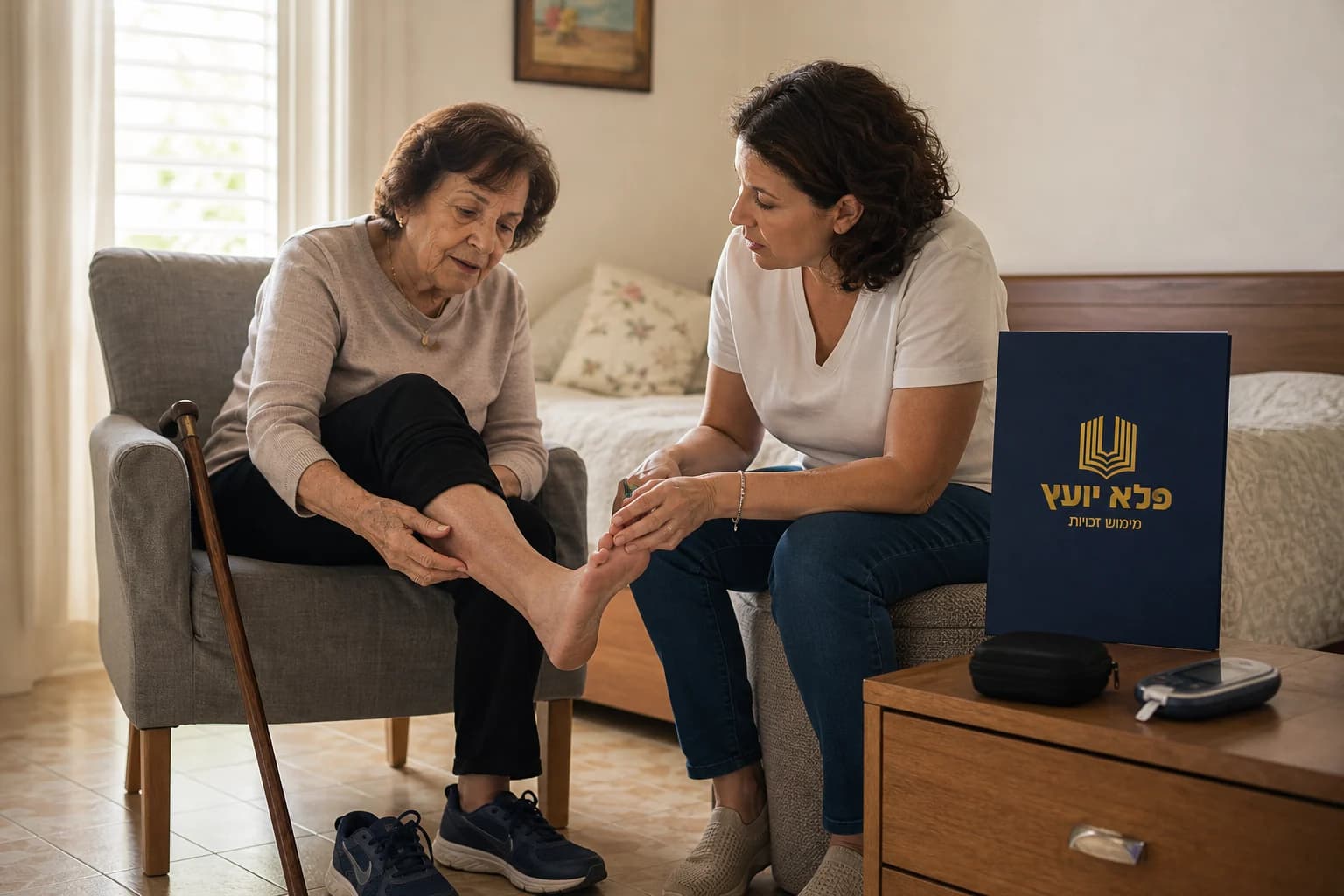
When diabetes becomes relevant to a long-term care insurance claim: complications such as visual impairment, neuropathy, chronic wounds, amputation and kidney failure — and how to document their effect on daily activities.
Diabetes itself is not a long-term care condition — its complications may be
Diabetes is a very common illness, and most people living with it function fully. So a diagnosis of diabetes, in itself, is not relevant to a long-term care claim.
The position changes when long-term complications appear. Visual impairment, neuropathy in the limbs, chronic wounds, amputation or kidney failure can each create genuine dependency in daily activities.
So in a diabetes file the emphasis is not on the illness but on what it has caused. A description that begins with "diabetic for thirty years" and does not go on to the complications and the functioning will not do the job.
The complications with the greatest functional effect
Not every complication carries the same weight in its effect on daily activities. These are the complications that usually create genuine dependency.
- Retinopathy and visual impairment — affects safety, mobility and the ability to manage medication
- Peripheral neuropathy — loss of sensation in the feet, impaired balance and mobility
- Diabetic foot and chronic wounds — limit walking and require daily care
- Amputation — creates direct dependency in mobility, transfers and bathing
- Kidney failure — may lead to dialysis and to significant dependency
- Strokes or cardiac events on a diabetic background
Managing the illness as an indicator of dependency
There is one aspect unique to diabetes: the illness itself requires daily management — readings, injections, dose adjustment, foot care.
When a person can no longer carry out that management themselves and someone else does it for them, that is a significant fact. It usually points to cognitive decline, or to impairment of vision or fine motor control.
It is important to state this explicitly: who measures the blood sugar, who injects, who sorts out the medication and what happens when there is nobody to do it. This is a description of dependency and sometimes of a need for supervision as well.
Wound care as daily dependency
A chronic wound on the foot requires regular care — dressings, monitoring, sometimes nurse visits. This is a daily burden that families do not always think to document.
For insurance purposes it is relevant in two senses: it limits mobility and walking, and it creates a need for constant assistance. Both go directly to the questions the definition in the policy asks.
The information on this page is general and does not constitute medical, legal or insurance advice. Diagnosis and treatment are carried out by a qualified medical professional only, and entitlement is determined according to the definition in the policy and the documents relevant to the case.
Frequently asked questions
Does diabetes entitle someone to long-term care insurance?
Diabetes in itself is not a long-term care condition, because most people living with it function fully. What may be relevant are the long-term complications and their effect on daily activities.
Which diabetes complications are relevant to a claim?
Visual impairment, peripheral neuropathy, diabetic foot and chronic wounds, amputation, kidney failure, and strokes or cardiac events on the background of the illness.
If somebody else injects and takes the readings — is that relevant?
Very much so. When the insured person cannot manage the illness themselves and it is done for them, that indicates dependency and sometimes a need for supervision too. It is worth setting out who does what and what happens without them.
Does caring for a chronic wound count as dependency?
It is relevant in two senses — limiting mobility and walking, and creating a need for constant assistance with dressings and monitoring. Both go directly to the questions the definition in the policy examines.
Official sources for further checking
This is general information and does not replace personal medical, legal or insurance advice. Eligibility is determined by the documents and rules that apply to each case.