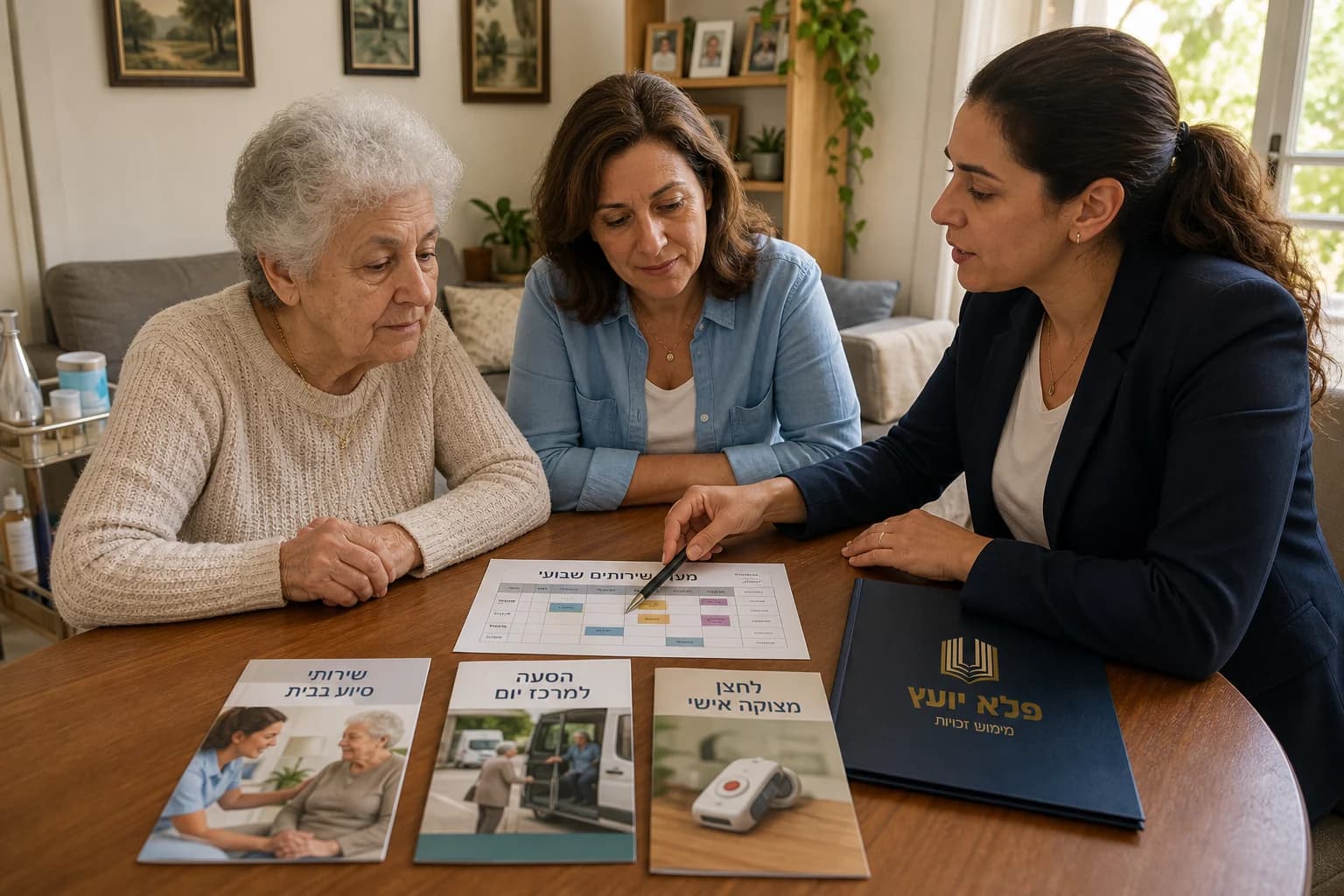

A guide to day centres for older people: what a day there involves, who it suits, how it fits into the long-term care benefit, what it costs, and why it is sometimes the best answer for both the family and the older person.
What a day centre is
A day centre for older people is a setting operating during the day that provides an older person with company, meals, activity and supervision — and sometimes ancillary services as well.
It is not a care home and it is not residential. The older person arrives in the morning, usually by organised transport, and returns home in the afternoon.
For many families it is the most balanced answer: the parent stays in their own home but has a regular setting — and the family gets hours in which it knows they are looked after.
What a day at the centre involves
The content varies between centres, but there are elements that recur in most of them.
- Organised transport from home and back
- Meals during the day
- Social, cultural and recreational activity
- Staff supervision throughout the hours of attendance
- Sometimes bathing services, foot care and nail cutting
- Sometimes physiotherapy, occupational therapy and paramedical treatment
- In certain centres — a dedicated setting for people with cognitive frailty
How it fits into the long-term care benefit
Attendance at a day centre is one of the components that may be included in the long-term care benefit's services basket, according to the entitlement level and the current rules.
In practice this means a family that has been granted entitlement can choose to allocate part of the basket to a day centre, instead of or alongside care hours at home.
The decision depends on the needs. Someone who mainly needs personal help in the morning may prefer care hours; someone whose central problem is loneliness, a lack of structure or a need for supervision during the day may gain more from a day centre.
Who it particularly suits
A day centre particularly suits someone who retains some mobility and is able to take part in a group setting, even if they need help.
It also suits situations of mild to moderate cognitive decline, and in some places there are dedicated settings for people with cognitive frailty, professionally adapted.
It suits less well someone who is bed-bound, someone needing close medical supervision, or someone whose cognitive condition has advanced to the point of significant difficulty in a group setting.
The advantage nobody talks about
Beyond the service itself, a day centre has an effect that is hard to measure: it restores a shape to the day.
An older person sitting at home with no structure tends to lose the shape of the day — sleeping at irregular hours, eating irregularly, becoming socially cut off. A regular setting changes that.
For the family the advantage is no less clear: hours known in advance in which the parent is looked after. That makes it possible to work, to rest, and to be more present during the hours you are with them.
Frequently asked questions
What is a day centre for older people?
A setting operating during the day that provides company, meals, activity and supervision. The older person arrives in the morning by transport and returns home in the afternoon — it is not residential.
What does a day at the centre involve?
Usually transport, meals, social and recreational activity, and staff supervision. In many centres also bathing and personal care services, and sometimes physiotherapy and occupational therapy.
Does the long-term care benefit cover a day centre?
Attendance at a day centre is one of the components that may be included in the long-term care benefit's services basket, according to the entitlement level and National Insurance's current rules.
Who does a day centre suit?
Mainly someone who retains some mobility and can take part in a group setting, including in mild to moderate cognitive decline. It suits less well someone bed-bound or needing close medical supervision.
Official sources for further checking
This is general information and does not replace personal medical, legal or insurance advice. Eligibility is determined by the documents and rules that apply to each case.