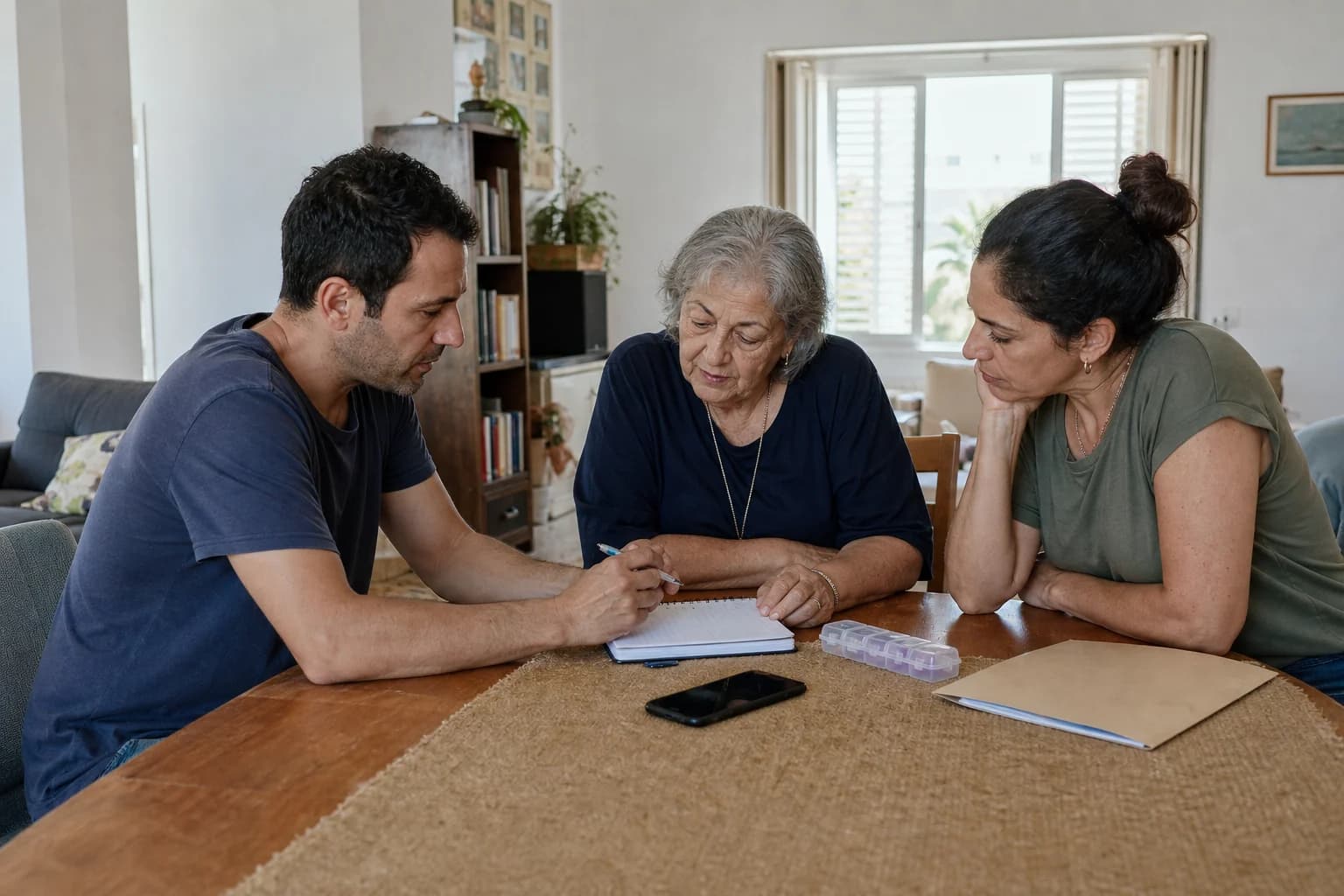
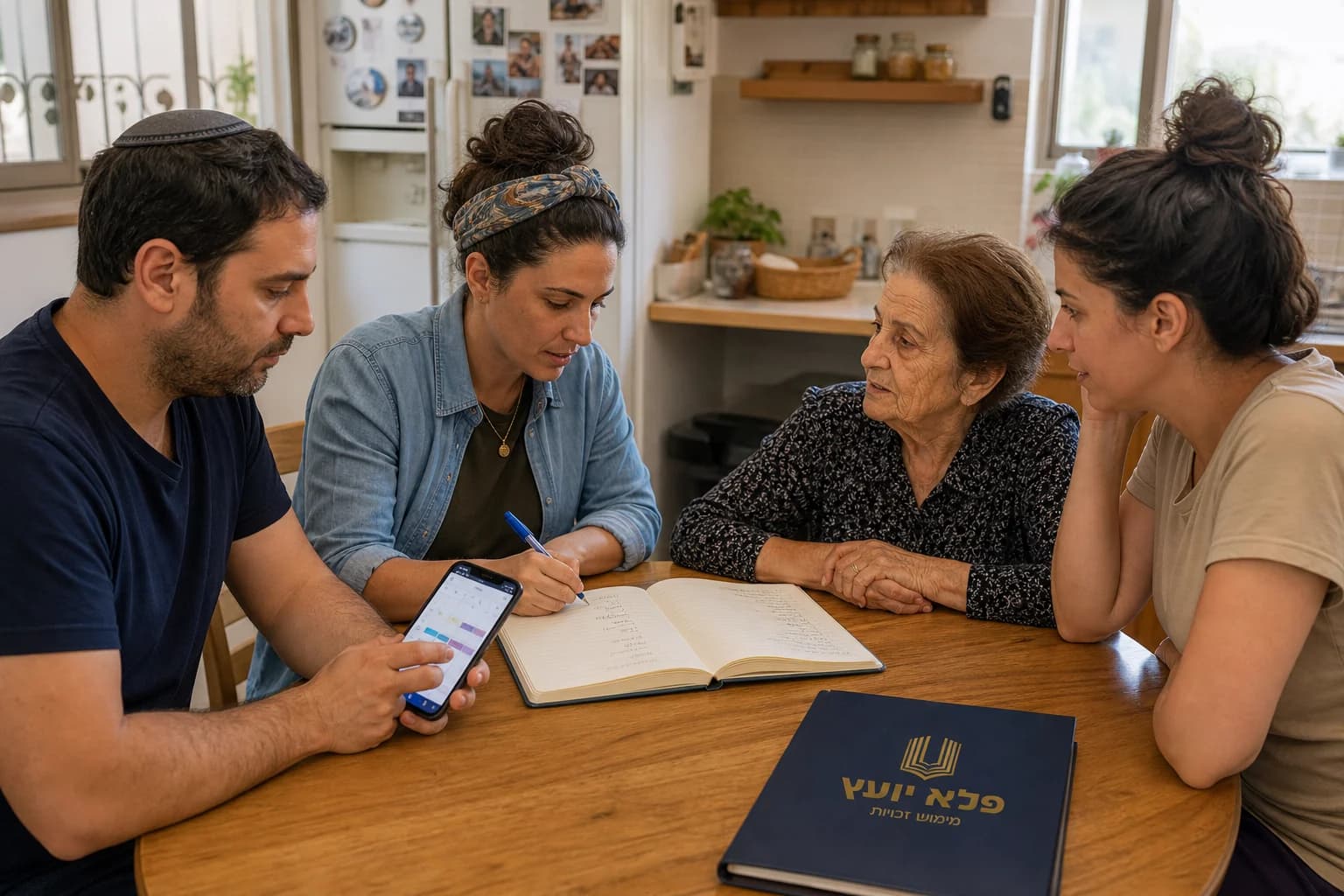
How to divide responsibility between siblings caring for an older parent: why one always carries more, how to build a division that works, what to do about a sibling who does not take part, and why one voice matters when dealing with the institutions.
Why one always carries more
In almost every family the same pattern forms: one brother or sister carries most of the load. Usually it is whoever lives nearby, whoever has more flexibility at work, or whoever finds it hard to say no.
It happens without a decision. At first someone takes it on because they are the most available, and then it becomes taken for granted. At a certain stage there is no longer anyone to turn to, because "she's looking after him anyway".
The problem is not only the load. It is also a sense of unfairness that accumulates and usually erupts in the worst possible place — in a conversation about money, about inheritance or about a medical decision.
Divide by capacity, not by equality
Trying to divide things equally almost always fails. A brother living abroad cannot come at weekends, and a sister with three young children cannot take a day a week.
What works is a division according to what each person can genuinely give — and not necessarily in the same currency.
Whoever lives far away can take on the paperwork, the insurance, the telephone coordination and the follow-up with the institutions. Whoever has the financial capacity can contribute to funding help. Whoever lives nearby takes the physical presence.
- Physical presence — visits, accompanying to the doctor, daily care
- Managing documents — insurance, National Insurance, following up claims
- Financial management — payments, bills, dealing with the bank
- Medical coordination — making appointments, keeping track of medication
- Financial contribution — funding a carer or services
- Supporting the main carer — giving them a break, not only the parent
The conversation worth having early
Most families never have an organised conversation. Things roll along, and when someone cannot keep it up there is an explosion.
An early conversation, even an uncomfortable one, saves a great deal. It does not have to be dramatic: you can sit down once, map out what is needed, and ask each person what they can take on.
It is important that it is explicit. "I'll help when I can" is not a commitment. "I'll take on all the insurance and National Insurance matters" is.
When a sibling does not take part
Sometimes a sibling simply does not come in. The reasons vary — distance, a complicated relationship with the parent, an emotional inability, or simply avoidance.
There is no magic solution, but there are a few things worth knowing. First, trying to force it usually does not work and only produces hostility. Second, sometimes the avoidance stems from not knowing what to do — a concrete, specific request is received better than "why aren't you helping".
And third: if there really is no participation, it is better to acknowledge that and build an arrangement that does not depend on them — including paid help — than to remain in an expectation that eats away at you.
One voice with the institutions
There is one point at which division does not work, and that is communication with the insurance company and with National Insurance.
When several family members call, give slightly different versions or send the same documents twice, the file looks disorganised. In some cases it even damages credibility.
The clear recommendation: choose one person to handle the communication, and keep a shared folder or file that everyone can see. The division can be entirely different in every other area.
Frequently asked questions
Why does one sibling always carry most of the load?
It happens without a decision — whoever lives nearby or has more flexibility takes it on at first, and it becomes taken for granted. The problem is not only the load but also the sense of unfairness that accumulates.
How do we divide responsibility between siblings?
By capacity, not by equality. Whoever lives far away can take the paperwork and insurance, whoever has the financial capacity can contribute to funding, and whoever lives nearby takes the physical presence.
What do we do about a sibling who does not take part?
Forcing it usually does not work. Sometimes the avoidance stems from not knowing what to do, and a concrete request is received better. If there is no participation, it is better to build an arrangement that does not depend on them.
Why does it matter that only one person speaks to the insurance company?
When several family members give different versions or send documents twice, the file looks disorganised and that sometimes damages credibility. It is advisable to choose one person to handle the communication.
Official sources for further checking
This is general information and does not replace personal medical, legal or insurance advice. Eligibility is determined by the documents and rules that apply to each case.