What matters when an older couple is involved: separate cover for each of them, a situation in which one spouse is caring for the other, the implications of mutual dependency, and what happens when both need help.
Two insured people, two files
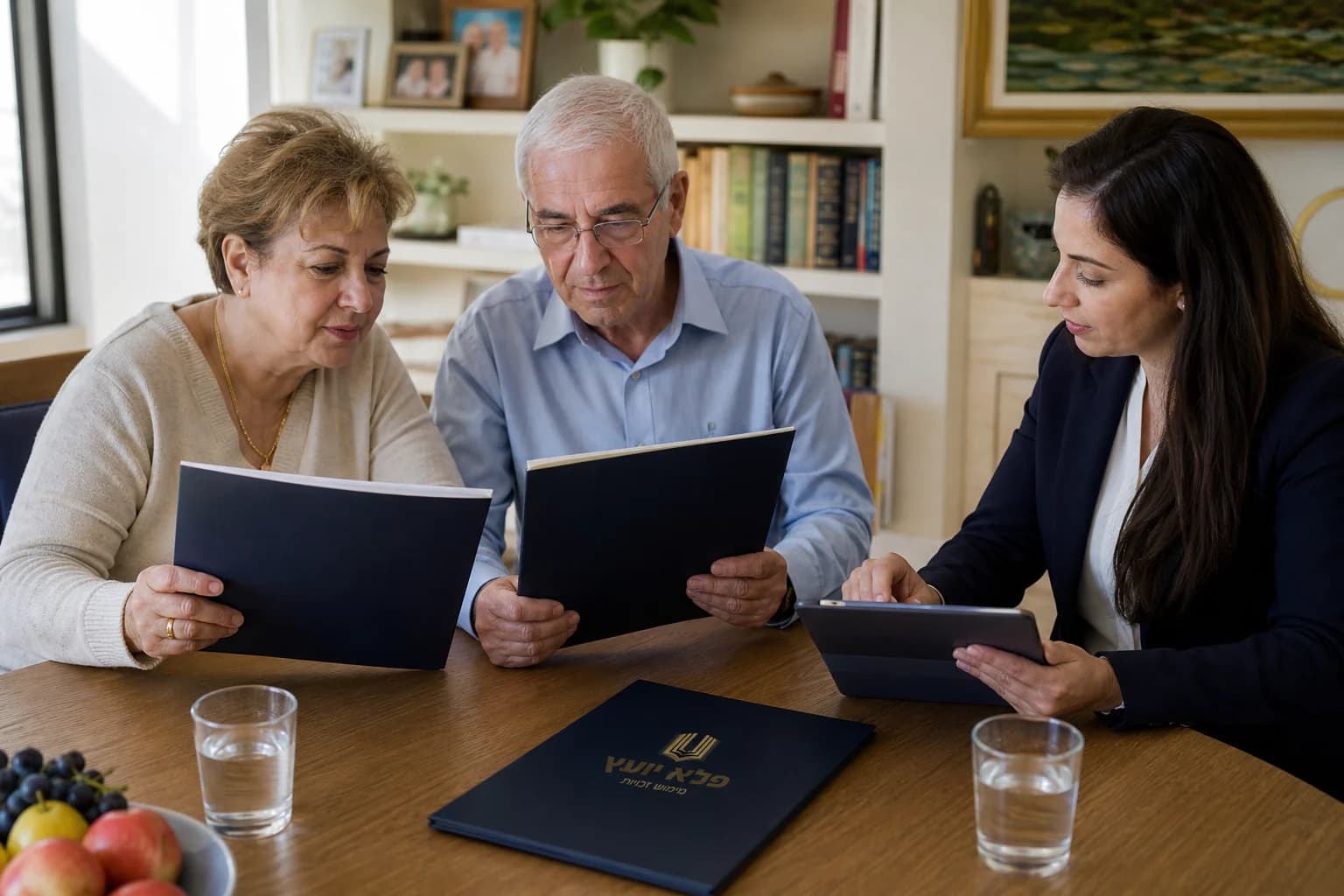
When an older couple is involved, the natural tendency is to treat them as a single unit. For insurance purposes that is a mistake.
Each of them is a separate insured person, with their own policy — or without one. It may be that one is insured and the other is not, that they hold different covers, or that they have identical policies on different terms according to the age at which they joined.
So the check has to be carried out for each of them separately. Families sometimes discover that only one parent was checked, while the other had the more favourable policy.
When one spouse is caring for the other
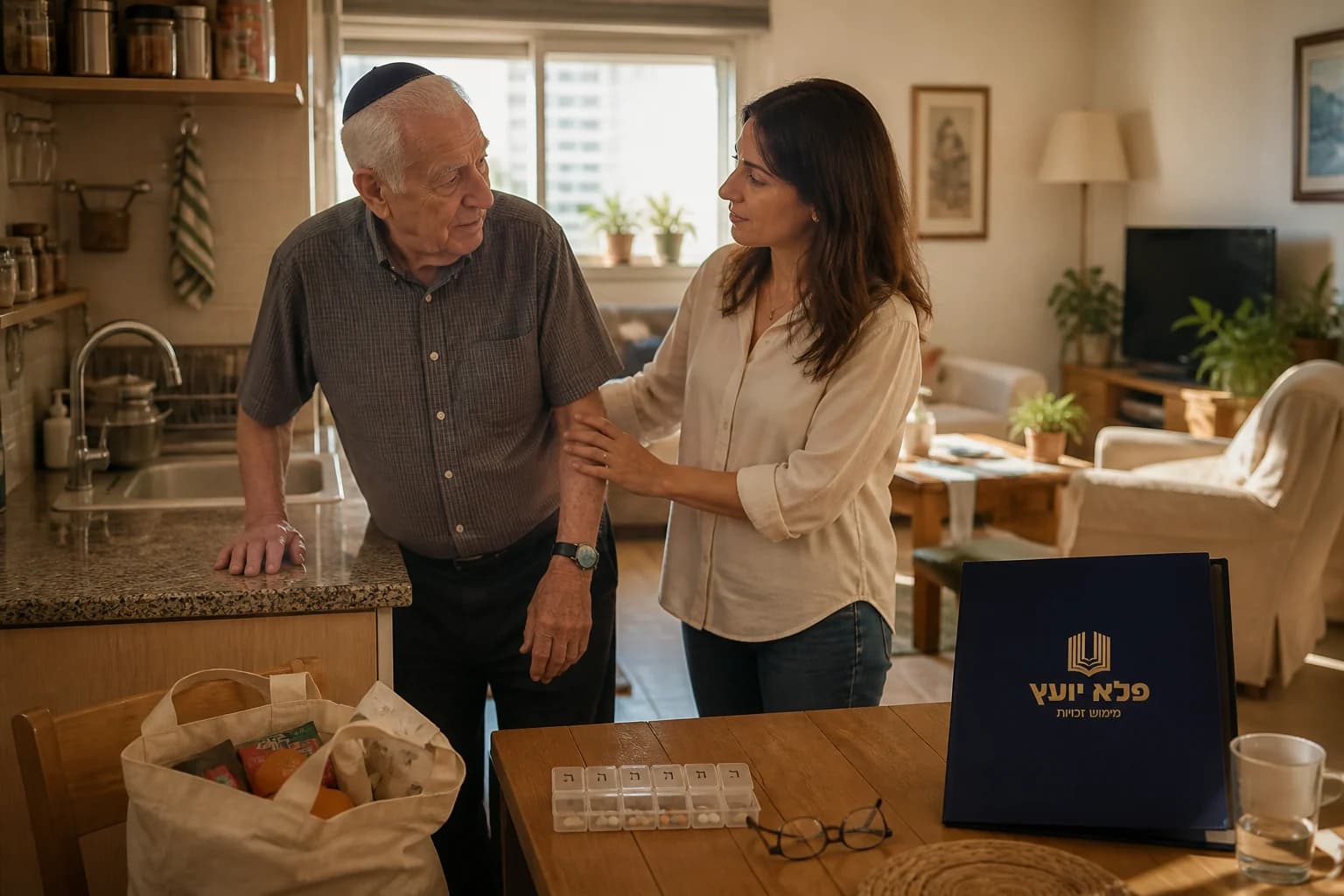
This is a very common and sometimes problematic situation: a woman of eighty caring for her husband, or the reverse. From the outside everything appears to be running, so nobody checks entitlements.
In practice two problems arise. The first: the help being given is not recorded anywhere, so the dependency is invisible. The second: the carer themselves is worn down, and sometimes their own condition declines in parallel.
An important point for documentation: when a spouse helps with bathing, dressing or mobility, that is dependency in every sense, exactly as if a paid carer were doing it. It is important to set this out explicitly and not to assume it is "natural".
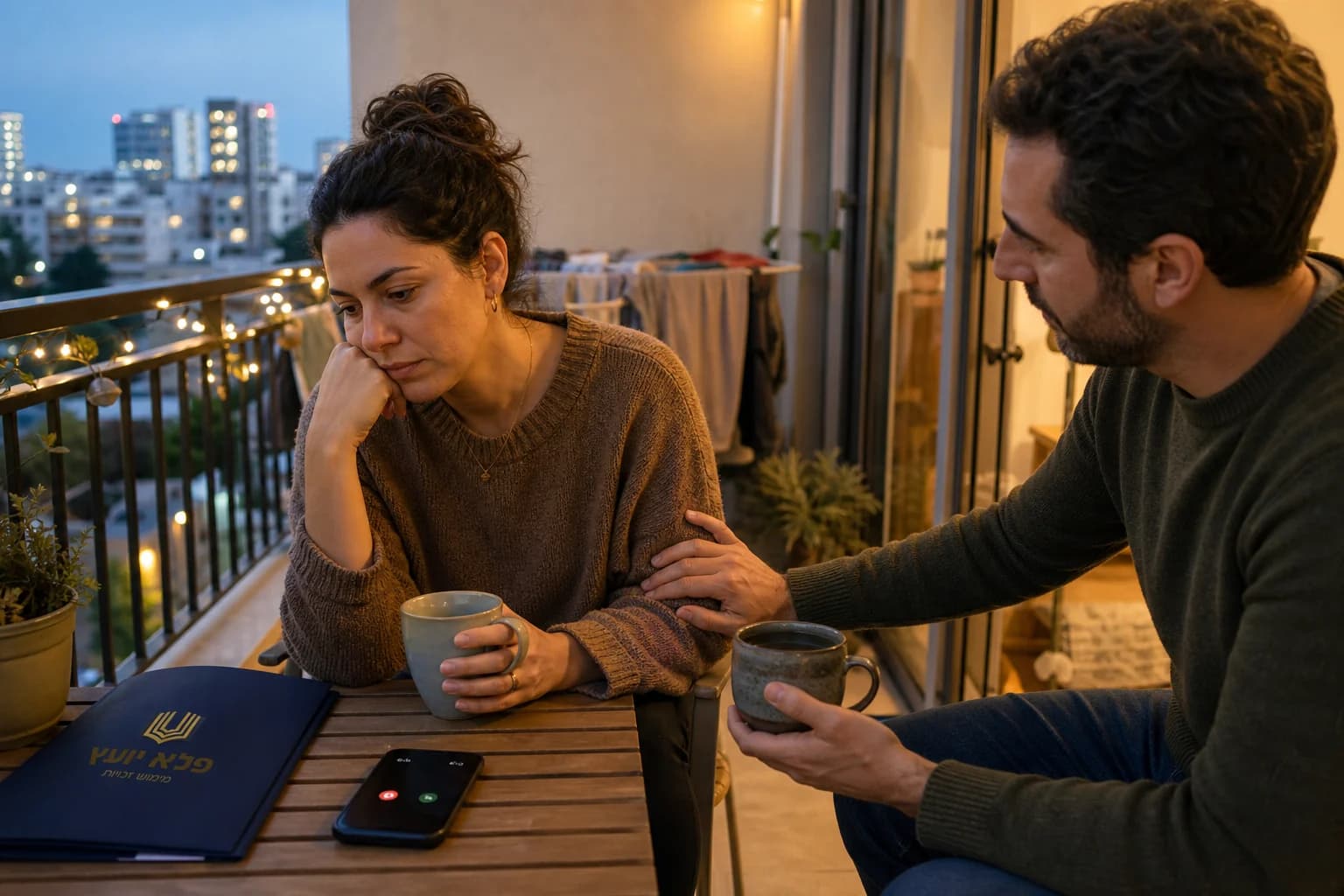
When the carer too begins to need help
In older couples this is a predictable development: the spouse who is caring reaches a state of needing help themselves. Sometimes it happens gradually and sometimes all at once, after a fall or a hospital admission.
The practical meaning is that the arrangement which had been holding up collapses at a stroke, and suddenly two people need care.
So the recommendation is not to wait. If one of the couple already needs help, it is worth checking entitlements for both — including existing cover and functional condition. It is better to know in advance than to face two crises at once.
What to check
A simple checklist worth going through where an older couple is involved.
- A check on the Insurance Mountain for each of the couple separately
- Whether there is a joint policy or two separate policies
- Whether the terms of the policies are identical or different
- Documentation of the help one spouse gives the other
- The functional condition of the carer themselves
- Checking entitlement to the long-term care benefit for each of them separately
Frequently asked questions
Do we need to check insurance for each of the couple separately?
Yes. Each is a separate insured person. One may be insured and the other not, or both may be insured on different terms according to the age at which they joined. Checking only one may miss cover.
Does a caring spouse count as dependency?
Absolutely. When a spouse helps with bathing, dressing or mobility, that is dependency in every sense, exactly as if a paid carer were doing it. It is important to set this out explicitly and not to assume it is natural.
What do we do when both of the couple need help?
Check entitlements for both separately — insurance cover, functional condition and entitlement to the long-term care benefit. It is better to do this early rather than once the arrangement has already collapsed.
Can claims be made for both spouses at the same time?
Yes. They are two separate files, each according to its own policy and functional condition. There is no connection between the outcome of one and the outcome of the other.
Official sources for further checking
This is general information and does not replace personal medical, legal or insurance advice. Eligibility is determined by the documents and rules that apply to each case.