
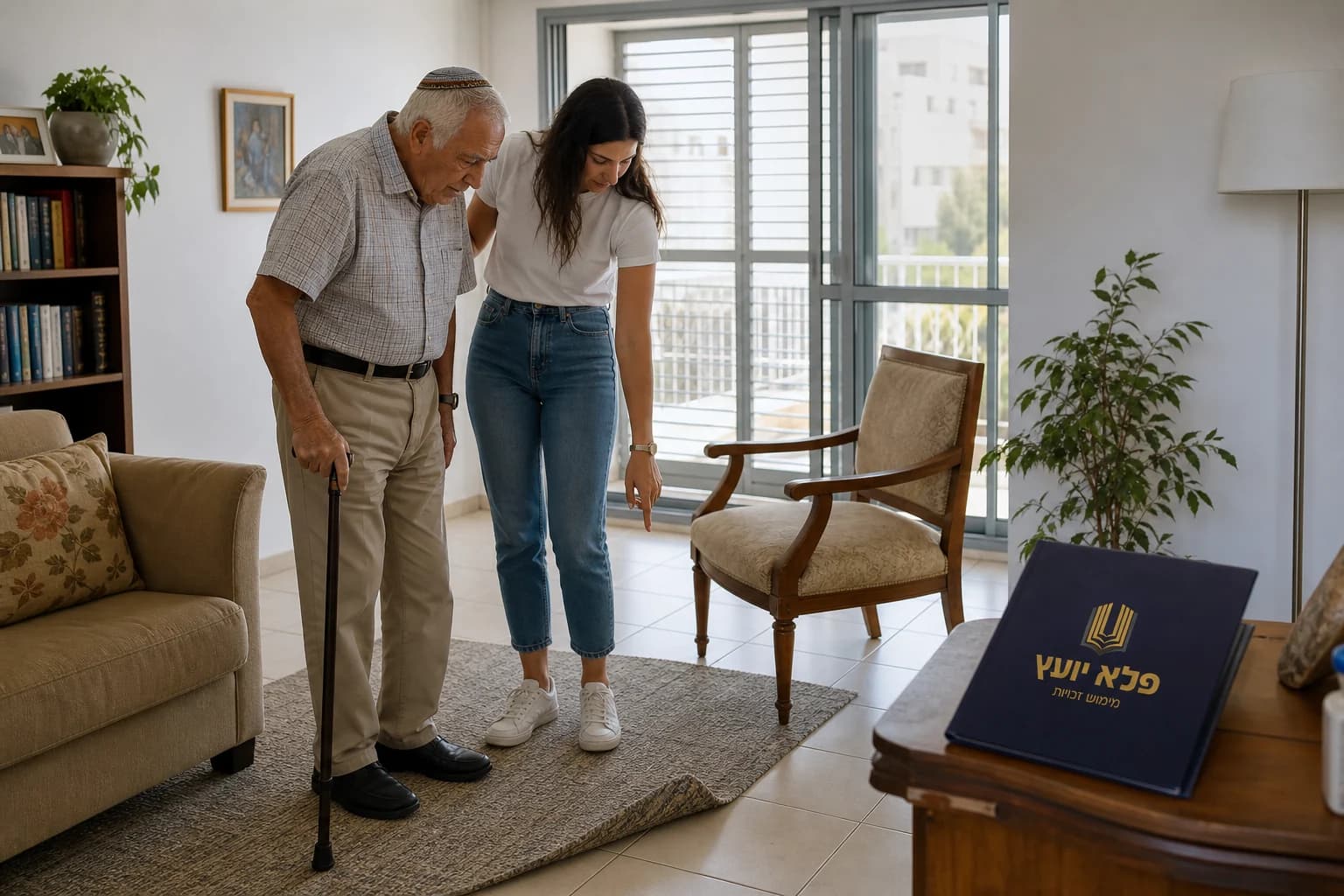
Why repeated falls are a central sign in a long-term care insurance claim: what they indicate about stability, mobility and the need for supervision, how to document them properly, and why falls that did not end in A&E matter too.
One fall is an incident. Repeated falls are a pattern
A single fall can happen to anyone. But when an older person falls again and again — once a month, once a fortnight — it is no longer chance. It is a sign of a problem with stability, mobility, vision or judgment.
For a long-term care claim, this carries weight on two levels. It indicates a limitation in mobility and transfers, and it indicates a need for supervision — because the risk exists whenever there is nobody nearby.
The problem is that most falls are not recorded anywhere. If nothing was broken and there was no trip to A&E, nobody wrote anything down.
Record what did not reach A&E too
This is one of the most practical recommendations we give families. Start writing down every fall — including minor ones, ones that caused no injury, and "near falls" caught in time.
A simple one-line entry is enough: date, time, where it happened, what they were doing at that moment, whether they were hurt, and who was at home. Within three months you will have a list that speaks for itself.
Such a list is very strong in a file, because it demonstrates frequency. The difference between "he falls sometimes" and "seven falls in four months, three of them in the shower" is the difference between an assertion and a fact.
- The date and time of each fall
- Where it happened — shower, kitchen, stairs, on the way to the toilet
- What they were doing at that moment and how it happened
- Whether they were hurt and whether treatment was needed
- Who was at home and who lifted them up
- How long they lay there before help arrived
What falls indicate
When you analyse a pattern of falls, you can usually identify which functional area is in difficulty — and that is exactly the information relevant to the definition in the policy.
Falls in the shower indicate difficulty with bathing and transfers. Falls when rising from a chair or a bed indicate a transfers problem. Falls on the way to the toilet at night indicate mobility problems and sometimes incontinence that forces an urgent rise.
Falls that happen because of confusion, disorientation or forgetting a walking aid point to a cognitive component, and are relevant to the cognitive incapacity route.
"How long did he lie there before they found him"
It is a question that sounds cruel but it is substantive. Someone who falls and is able to get up unaided is in one situation. Someone who stays on the floor until somebody arrives is in an entirely different one.
The second situation is almost a classic definition of a need for supervision. If the answer is that he lay there for an hour until his daughter arrived, or that he pressed a personal alarm, that has to appear in the file.
The installation of a personal alarm is itself a fact worth mentioning. It shows that the family identified a risk and acted to prevent it.
What to do alongside the claim
Repeated falls call for medical investigation and not only for insurance documentation. They may stem from medication, blood pressure, visual problems, balance disturbance or neurological conditions.
Approaching the treating doctor matters both medically and for the file — it creates professional documentation of the problem. In parallel it is worth considering adaptations in the home that reduce the risk.
The information on this page is general and does not constitute medical, legal or insurance advice. Diagnosis and treatment are carried out by a qualified medical professional only, and entitlement is determined according to the definition in the policy and the documents relevant to the case.
Frequently asked questions
Are repeated falls relevant to a long-term care claim?
Very much so. They indicate a limitation in mobility and transfers, and also a need for supervision because of the risk whenever there is nobody nearby. Both go directly to the definition in the policy.
Do we need to record falls that did not reach A&E?
Absolutely, and this is one of the important recommendations. Most falls are not recorded anywhere. A simple record of date, place, circumstances and who was at home builds a strong picture within months.
What does a fall in the shower indicate compared with a fall when rising from a chair?
Falls in the shower indicate difficulty with bathing and transfers. Falls when rising indicate a transfers problem. Falls on the way to the toilet at night point to mobility and sometimes to incontinence.
Why does it matter how long they lay there before help arrived?
Because that is almost a classic definition of a need for supervision. Someone unable to get up unaided who stays on the floor until somebody arrives is in a fundamentally different position from someone who gets up on their own.
A personal alarm in the home — is it worth mentioning?
Yes. It shows that the family identified a genuine risk and acted to prevent it, and that is a fact supporting the description of the need for supervision.
Official sources for further checking
This is general information and does not replace personal medical, legal or insurance advice. Eligibility is determined by the documents and rules that apply to each case.