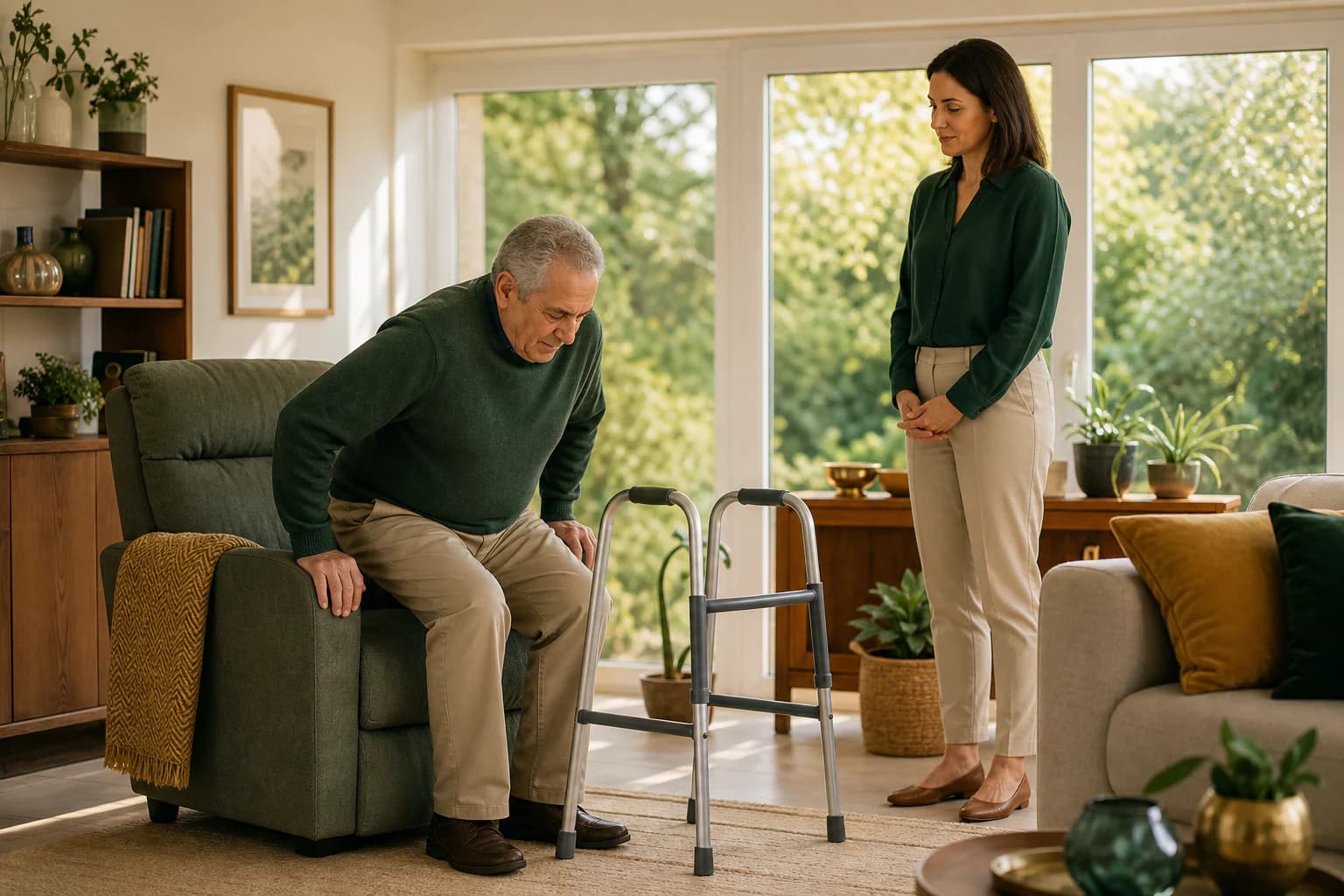
What to expect from a functional assessment carried out at home, what matters in the description, and how to avoid a gap between the moment of the examination and the actual routine.
What the examination is for
The assessor is seeking to understand the ability to carry out basic activities and the need for supervision. The method and the rules differ between National Insurance and an insurance policy, so there is no single score that fits every route.
Describe most days
Many people make an effort to succeed out of politeness or embarrassment. A momentary effort does not always represent an ordinary week. On the other hand, do not present an inability that does not exist.
Describe how much help is needed, who provides it, what a good day looks like and what most days look like.
What to prepare
There is no need to rehearse activities or to change any treatment. It is worth gathering the aids in use, a list of medication and current records, and making sure someone who knows the routine is available.
- A walking frame, shower chair or other regular aid
- A description of falls or safety risks
- Difficulty with washing, dressing, eating, mobility, transfers and continence
- Any need for cognitive supervision
After the examination
Note what was examined and what was provided, and keep any summary you receive. If the report does not reflect the situation, compare it against the facts and the documents before making a further approach.
Frequently asked questions
Who comes to the functional assessment at home?
A professional on behalf of the assessing body — usually a nurse, an occupational therapist or another medical professional. Who assesses and how is set by the procedures of National Insurance or the insurance company.
How long does the functional assessment take?
The duration varies with the situation and the assessing body. Preparation matters more than length: an organised description of an ordinary day, who helps and how often.
Should we tidy the house before the visit?
There is no need, and it is better not to. Tidying that conceals the daily difficulty, or putting aids out of sight, creates a picture that does not reflect the routine.
What if the situation on the day of the examination is better than usual?
Say so explicitly to the assessor and describe what other days look like, including frequency. A momentary effort does not represent an ordinary week.
Can we obtain the assessment report?
When a decision arrives that does not match the situation, it is worth asking for the report to see what was recorded in each area. That is the starting point for any reasoned approach.
Official sources for further checking
This is general information and does not replace personal medical, legal or insurance advice. Eligibility is determined by the documents and rules that apply to each case.