How to keep a functional diary that strengthens a long-term care insurance claim: what to record, how often, which details matter, a full example of a good entry against a weak one, and why it is worth more than another medical document.
Why it works better than another medical document
Families put enormous effort into collecting medical documents, and often that is not what is missing. What is missing is a description of what happens at home — and that is exactly what no doctor can write, because they are not there.
A functional diary is a document you can produce yourselves, at no cost, in minutes a day. And it is usually the document that explains the picture better than anything else.
It also solves another problem: memory. In six months, when you are asked to describe the situation, you will not remember how many falls there were in March. If you wrote it down, you will know.
What to record
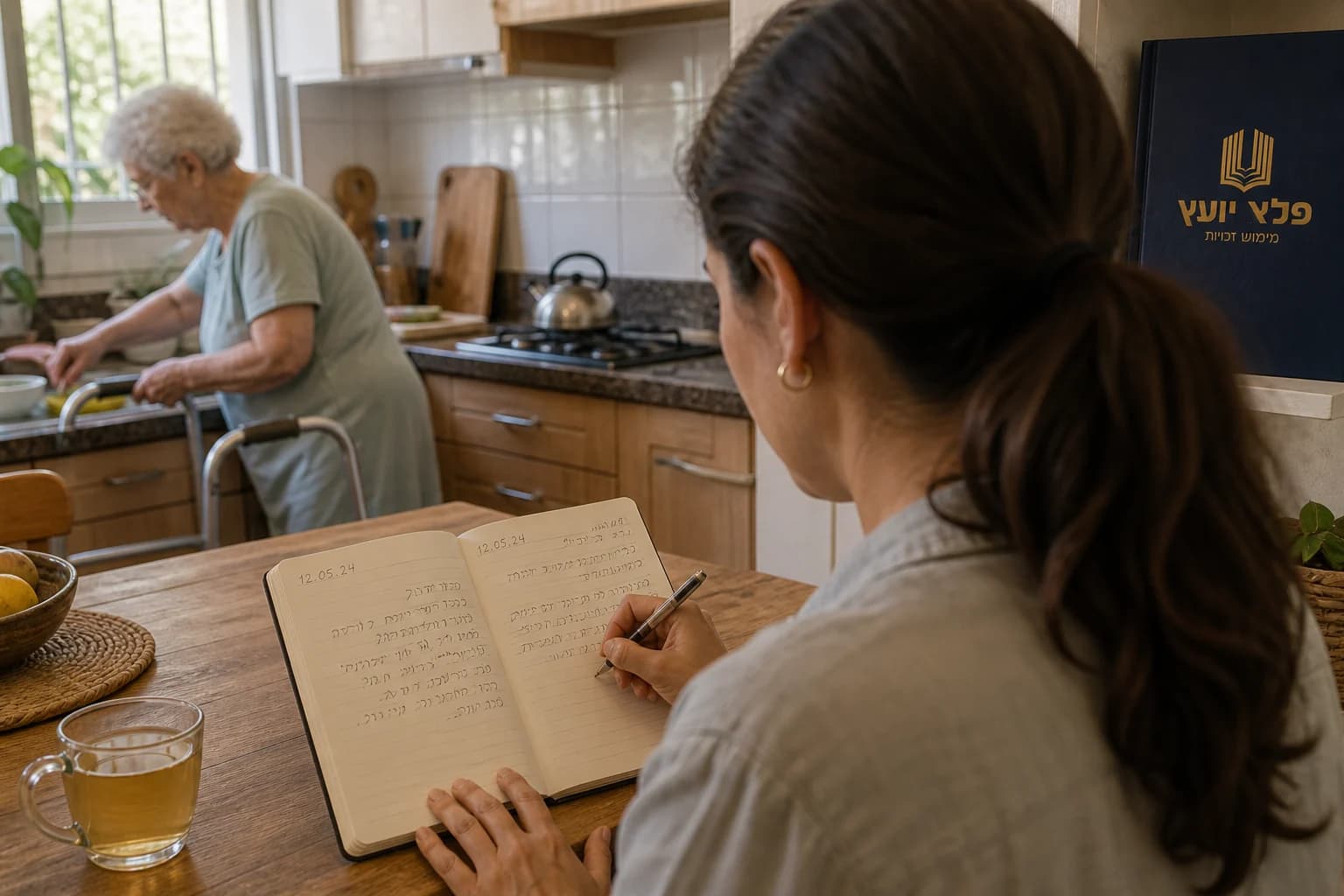
No complicated format is needed. A notebook, a file on the phone or a family WhatsApp group — any of them works. What matters is what gets recorded.
- The date — on every entry, always
- Which activity — bathing, dressing, eating, transfers, using the toilet
- Who helped — name and relationship (daughter, carer, spouse)
- What exactly was done — not 'I helped' but 'I washed her back and legs, and supported her getting in and out'
- How long it took — particularly where it goes beyond the usual
- Unusual events — a fall, confusion, medication not taken, leaving the house
- What happened when there was no help — a shower skipped, did not eat, stayed in bed
An example: a weak entry against a strong one
The difference between a diary that carries weight and one that does not lies in the detail, not the length. Here are two versions of the same day.
A weak entry: "5 March — helped Mum with her shower. She is not feeling well."
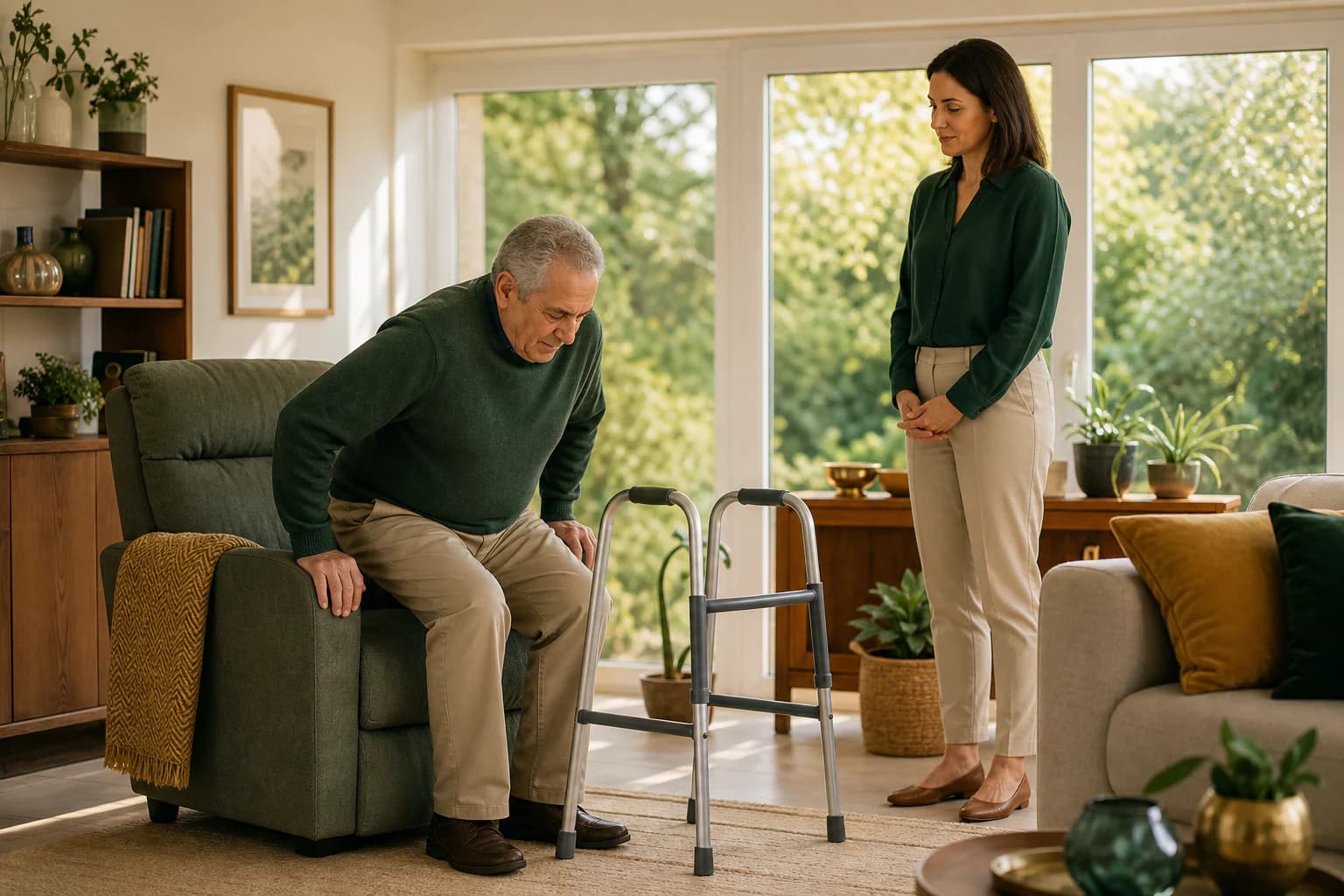
A strong entry: "5 March, morning — Mum could not get into the shower on her own. I lifted her out of bed (she cannot get up without being pulled), walked her to the bathroom with the walking frame, she sat on the shower chair, I washed her back, legs and hair. Drying and dressing — including socks and shoes, which she cannot reach. About 40 minutes in all. Afterwards she went back to bed to rest until 11:00."
The second is not especially long, but it contains information about four different activities out of six. That is exactly what is assessed.
For how long and how often
There is no need to record every day for ever. Two weeks to a month of daily entries gives an adequate picture, and after that you can move to recording unusual events only.
That said, if the condition fluctuates — for example in Parkinson's, in multiple sclerosis or after hospital admissions — it is worth continuing over time, because the fluctuation is precisely what needs to be shown.
A practical tip: if several family members help, open a single WhatsApp group and ask each of them to write at the end of their visit what they did. It takes almost no effort and builds up into excellent documentation, complete with automatic timestamps.
What not to do
A diary written in order to impress does not work, and sometimes does harm. If the descriptions are exaggerated and do not sit with the medical documents or with the assessment that will be carried out, it damages the credibility of the whole file.
Do not write in dates retrospectively that you do not remember. If you are starting today, start from today. You can note separately, as an estimate, when you think the condition began.
And do not leave out the good days. A diary showing both reasonable days and difficult ones is far more credible than one in which every day is a disaster.
How it is used in the claim
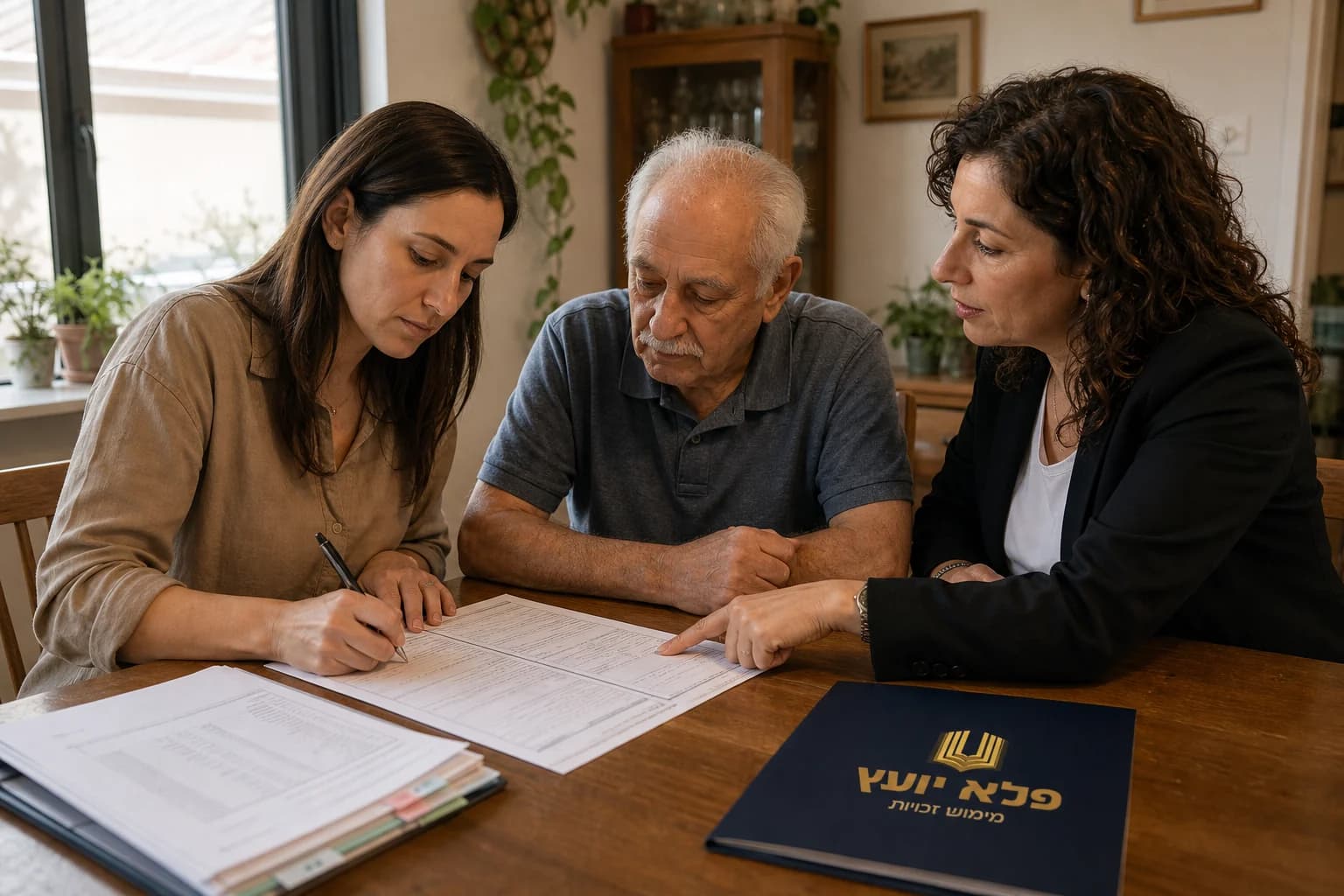
You can attach the diary as an appendix to the claim form, and you can use it as the basis for writing the functional description — summarising the patterns and frequencies from it.
Usually the best combination is a short, orderly summary on the form, with the full diary as an appendix. That way the reader gets the picture at once, and can go into the detail if they wish.
The diary is also useful in the functional assessment itself — it allows you to answer questions about frequency with confidence, instead of replying "sometimes".
Frequently asked questions
What is a functional diary and why does it matter?
A simple daily record of the help actually given — who helped, with what, for how long, and what happened when there was no help. It is usually the document that explains the picture better than any medical document, because no doctor is there in the home.
What exactly do we record in it?
The date, which activity, who helped, what exactly was done, how long it took, unusual events such as falls or confusion, and what happened on the occasions when there was no help.
For how long do we need to keep a diary?
Two weeks to a month of daily entries gives an adequate picture. In fluctuating conditions such as Parkinson's or multiple sclerosis it is worth continuing over time, because the fluctuation is precisely what needs to be shown.
Can we write entries retrospectively?
It is not advisable to write in dates you do not remember precisely. It is better to start from today and to note separately, as an estimate, when you think the condition began.
Should we describe only the difficult days?
No. A diary showing both reasonable days and difficult ones is far more credible. Exaggerated descriptions that do not sit with the documents damage the credibility of the whole file.
How do we attach the diary to the claim?
The best combination is a short, orderly summary on the claim form, with the full diary as an appendix. That way the reader gets the picture at once and can go into the detail.
Official sources for further checking
This is general information and does not replace personal medical, legal or insurance advice. Eligibility is determined by the documents and rules that apply to each case.