What to do when a long-term care insurance claim is refused on the ground that the functional definition is not met, or that dependency was not found in the required number of activities: how to read the assessment report, where the gaps arise, and how to build a supported approach.
The commonest ground of refusal — and usually the one most open to challenge
Most refusals in long-term care claims do not stem from there being no cover or the policy not being in force. They stem from a finding that the functional condition does not meet the definition — for example that dependency was found in only two activities where the policy requires three.
The good news is that this is in fact the ground you can deal with best, because it is factual rather than legal. The question is not what the law says but what actually happens at home — and that is something you can prove.
The less good news is that most families respond in a way that does not help: they send a letter explaining how difficult the situation is, without addressing the specific area that was found to be independent. An approach like that is almost always refused.
The first step: obtain the assessment report
The refusal letter usually contains only the bottom line. What you really need is the functional assessment report — the document recording what was found in each area separately.
Without the report you are working blind. You know you were refused, but you do not know whether the person was found independent in bathing, in dressing or in mobility. Each of those possibilities leads to an entirely different approach.
You can ask the insuring body for the report. When it arrives, read it area by area and mark exactly where the gap lies between what was recorded and what actually happens.
Where the gaps arise — the three commonest places
From experience, the gap almost always falls in one of three places. Identifying the right one is half the work.
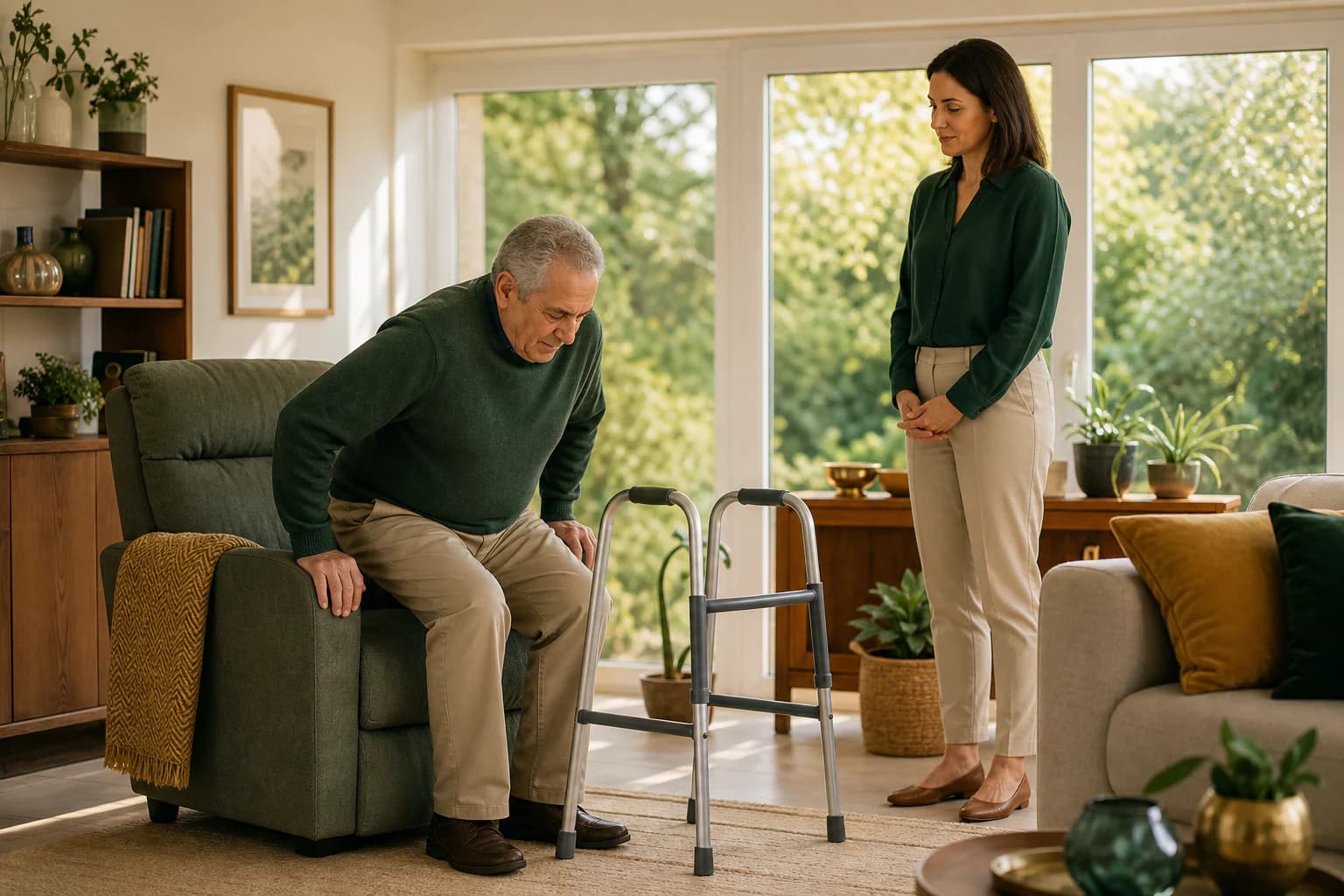
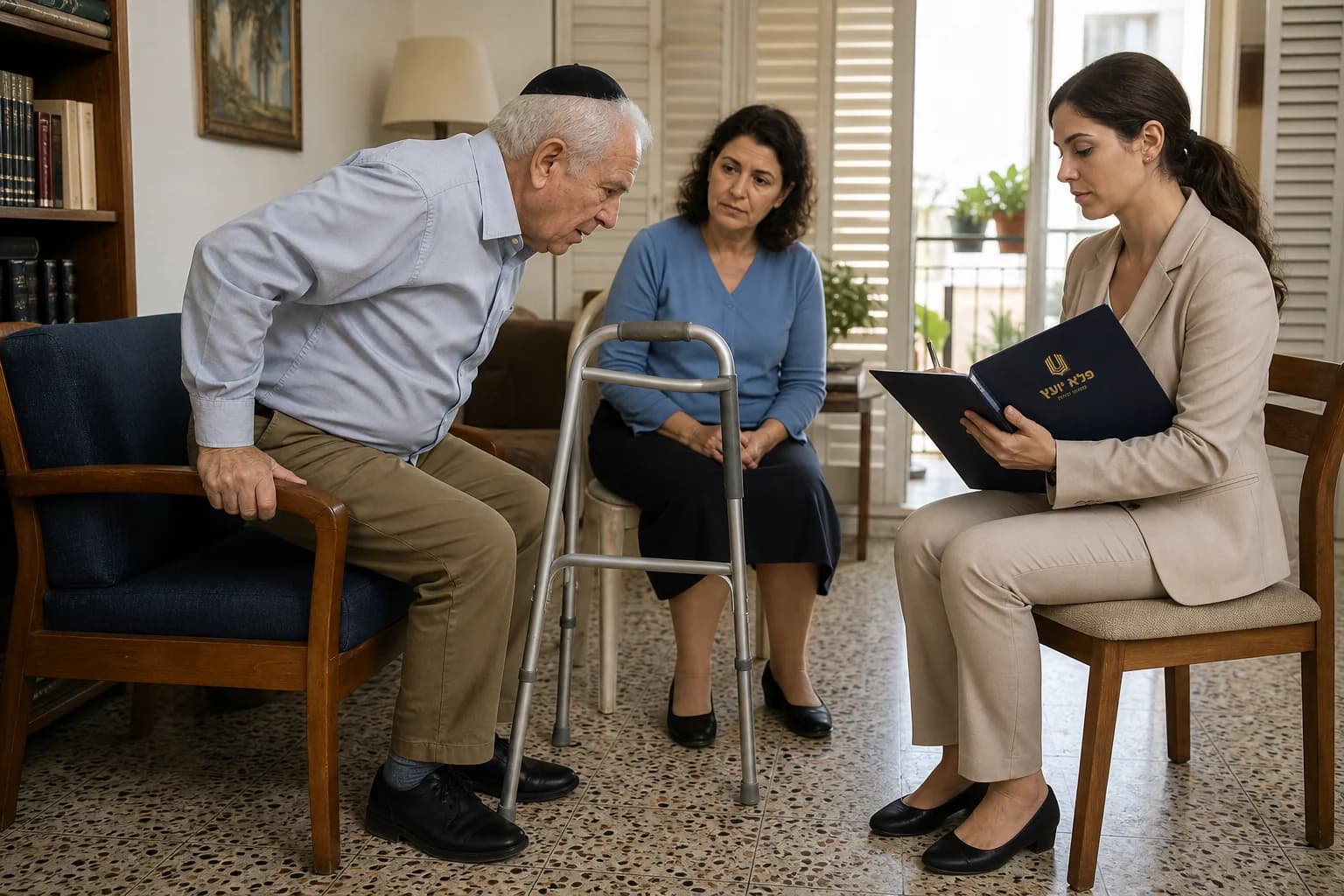
The first is presenting independence during the assessment. An older person, out of pride or embarrassment, makes an effort to show they are managing. They get up from the chair unaided, say they shower on their own, and do not mention that their daughter stands outside every time.
The second is confusing independence with supervision. "He dresses himself" — but who lays out the clothes? Who helps with the socks? If part of the activity is done by someone else, that is not full independence.
The third is an unusually good day. Many people's functioning varies from day to day, particularly in Parkinson's, after a hospital stay or in cognitive conditions. An assessment carried out at a good hour produces a picture that does not represent most days.
What is supported against what is merely asserted
For an approach to work, it is not enough to say the description is wrong. You have to show it. The difference between an assertion and evidence is the difference between an approach that is refused and one that is taken seriously.
The following list covers the kinds of evidence that carry most weight in a functional context. Not all of them exist in every case, but the more there are, the stronger the picture.
- A document from a treating doctor addressing explicitly the area found to be independent
- A report from an occupational therapist or physiotherapist assessing ability to transfer and mobility
- A carer's employment contract and payslips, setting out the activities they perform
- A functional diary kept over weeks, with dates and frequencies
- Documentation of falls, visits to A&E or safety incidents
- A National Insurance decision and dependency assessment report, if they exist
- Photographs of adaptations in the home — a grab rail, a shower chair, an adjustable bed
The structure of the approach: area by area
The format that works is simple and unemotional. Go through the areas in dispute one by one, and for each write three things: what the report recorded, what actually happens, and which document supports it.
For example, instead of writing "Mum is in a very bad way and you are wrong", write: "The report records that the insured is independent in bathing. In practice her daughter assists her getting in and out of the shower and washing her back every day, as set out in the attached diary for the period 1 March to 30 April. A shower chair has been installed in the home, as set out in the attached invoice."
A paragraph like that can be checked. An emotional paragraph cannot. And when there are three such paragraphs, pointing to three supported areas, the picture changes.
When a fresh assessment is needed
Sometimes the gap is too wide for documents alone to bridge, and then you can ask for a fresh assessment. That option exists, but it is worth approaching it prepared.
If you request a further assessment, it is important that the preparation is good this time: that the insured person understands there is no need to make an effort to prove independence, that someone who knows the daily routine is present, and that the aids and the documentation are to hand.
It is also important to remember that a fresh assessment may produce the same result. So it is better to request one when there is also new supporting documentation, rather than merely as a request for another try.
When it becomes a matter for someone else
If the refusal rests only on a functional assessment, that is factual work, and it can be handled within professional support.
But if the letter adds further grounds — an allegation of a pre-existing medical condition, a question of prescription, or a disputed interpretation of a policy clause — the picture changes, and a legal review may be required.
We will tell you so explicitly if we see that this is the position. It is better to know early than to find out after a deadline has passed.
Frequently asked questions
We were refused because dependency was not found in enough activities — can we challenge it?
Yes, and this is in fact the ground you can deal with best, because it is factual. The first step is to obtain the assessment report and identify exactly which area was recorded as independent.
How do we obtain the functional assessment report?
Ask the insuring body for it. The refusal letter usually contains only the bottom line, whereas the report sets out what was found in each area — and that is the information needed to build an approach.
Why was our parent recorded as independent when they are not?
Three common reasons: the insured person made an effort to present independence out of pride or embarrassment; confusion between full independence and performing an activity with help or supervision; or an assessment carried out on an unusually good day that is not representative.
What is most persuasive in an approach about a functional refusal?
Supported evidence rather than an emotional description: a medical document addressing the specific area, an occupational therapist's report, a carer's contract and payslips, a functional diary with dates and frequencies, and documentation of falls or safety incidents.
Can we request a fresh functional assessment?
Yes, but it is worth approaching it prepared and preferably with new supporting documentation. A fresh assessment without further material may produce the same result.
When does a functional refusal become a legal matter?
When further grounds are added, such as an allegation of a pre-existing medical condition, a question of prescription, or a dispute about the interpretation of a policy clause. In such cases a legal review may be required.
Official sources for further checking
This is general information and does not replace personal medical, legal or insurance advice. Eligibility is determined by the documents and rules that apply to each case.