How severe visual impairment or blindness affects a long-term care insurance claim: the consequences for safety, mobility and managing medication, what happens when cognitive decline is added, and what matters in documenting it.
Sight is not one of the six activities — but it affects all of them
The definition in long-term care policies usually refers to six daily activities, and sight is not one of them. That is why claims focusing on visual impairment alone are sometimes refused.
But the full picture is different. Severe visual impairment in older age in practice affects almost every activity: preparing food, identifying medication, getting safely into the shower, moving about inside and outside the home.
So the right approach is not to present the visual impairment as a claim in its own right, but to describe how it manifests itself in each of the activities the definition speaks about.
How visual impairment translates into dependency
The following list illustrates what a description connecting the impairment to the definition looks like.
- Eating — whether they can identify the food on the plate, whether preparation or direction is needed
- Dressing — whether they can identify clothes, whether someone lays them out and matches them
- Bathing — whether they can get into the shower safely, whether they can identify products
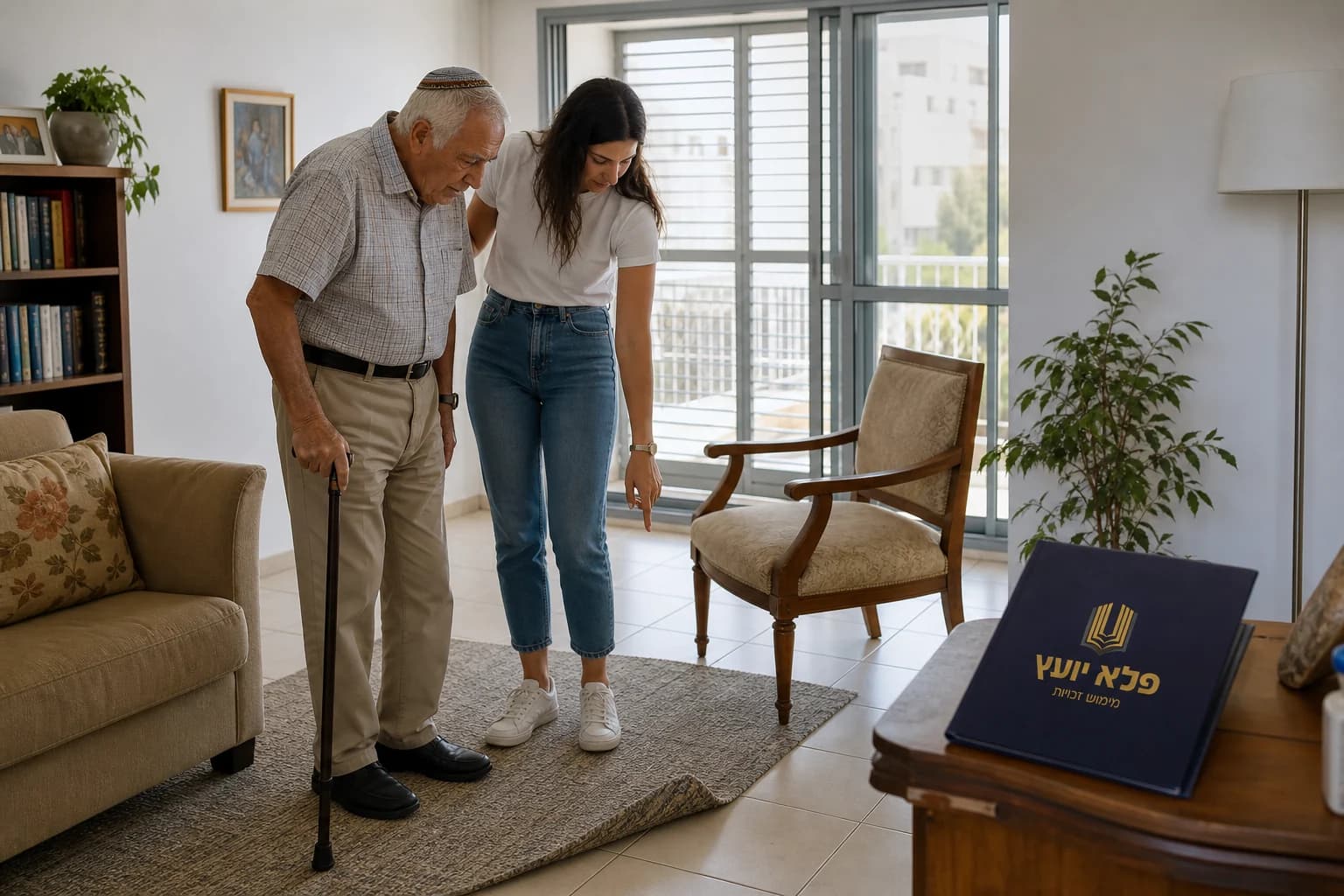
- Mobility — whether they can move about inside and outside the home, whether accompaniment is needed
- Medication — whether they can identify tablets and doses, who sorts them out
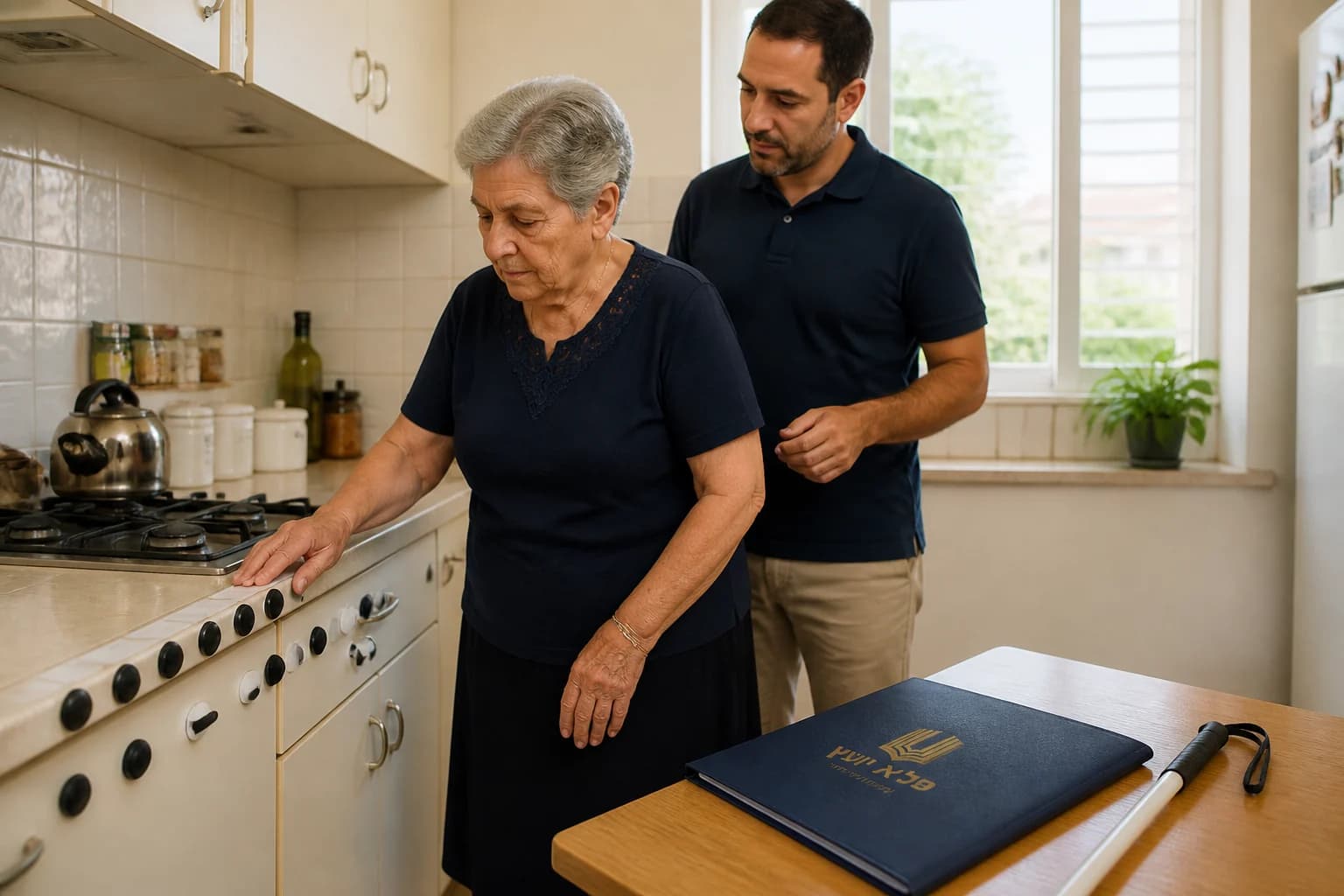
- Safety — falls, walking into things, risk in using gas or appliances
When cognitive decline is added
In someone with normal sight, mild cognitive decline may be manageable. In someone with severe visual impairment, the same decline creates a far more dangerous situation.
A person who cannot see and cannot remember well cannot fall back on either sense. That is a situation that usually justifies an explicit description of a need for supervision.
It is worth describing specific incidents: walked into the furniture, took the wrong medication, could not find the way back to the room.
Professional documentation
A document from an ophthalmologist setting out visual acuity and the visual field is the basis. But as in other situations, it does not describe functioning.
It is worth asking for an explicit reference: whether the insured person is able to move about independently and safely, whether they are able to identify medication, and whether supervision is needed. In addition, if an assessment by low-vision rehabilitation services was carried out, it is a document of value.
The information on this page is general and does not constitute medical, legal or insurance advice. Diagnosis and treatment are carried out by a qualified medical professional only, and entitlement is determined according to the definition in the policy and the documents relevant to the case.
Frequently asked questions
Does blindness entitle someone to long-term care insurance?
Sight is not one of the six daily activities the definition refers to, so a claim focusing on visual impairment alone may be refused. You have to describe how the impairment manifests itself in each of the activities.
How do we describe visual impairment in the functional description?
By activity: whether they can identify food on the plate, whether they can identify clothes, whether they can get into the shower safely, whether they move about alone, and who sorts out the medication.
What happens when there is cognitive decline as well?
The combination creates a particularly high risk, because the person cannot fall back on either sense. That usually justifies an explicit description of a need for supervision, with concrete incidents.
What should we ask the ophthalmologist for?
Beyond acuity and the visual field — a reference to functioning: whether the insured person is able to move about independently and safely, whether they can identify medication and whether supervision is needed.
Official sources for further checking
This is general information and does not replace personal medical, legal or insurance advice. Eligibility is determined by the documents and rules that apply to each case.